
Turnkey Automation
Automation

A cobot is a collaborative robot. Force sensors and limited speed allow it to work directly alongside people without a separating safety fence. It shares the same workspace instead of operating behind a cage. Cobots therefore bridge the gap between manual work and the conventional, enclosed robot cell. This guide covers how cobots work, safety standards, typical applications, costs and selection criteria. This will help you assess whether a cobot is right for your automation project.
Reading time approx. 10 minutes
A cobot (collaborative robot) is a robotic arm. It is designed to share a workspace with people without endangering them. The term stands for human-robot collaboration (HRC). The cobot was invented in 1996 by researchers J. Edward Colgate and Michael Peshkin at Northwestern University.
The key difference from a conventional industrial robot lies in the safety concept. An industrial robot is built for speed, payload and repeatability. Safety fences, light barriers or safety scanners separate it from people. A cobot, by contrast, continuously monitors its forces and stops on contact. It operates more slowly and carries less, but eliminates the need for fencing and the floor space it requires.
A cobot therefore does not replace the industrial robot, but forms a category of its own. Cobots are designed for processes with frequent product changeovers, limited space and direct collaboration. They excel where people and automation share a task. Where the shortest possible cycle time and maximum precision matter, the conventional robot remains the first choice.
Cobots rely on three technical components: torque sensors in the joints, limited collaborative speed and a graphical user interface. Each joint continuously measures the applied torque. If the arm encounters unexpected resistance, the controller registers this as a collision and stops immediately.
In collaborative operation, the controller limits the speed to approximately 1 meter per second. This is necessary to ensure that collision detection responds in time and the arm stops before harm occurs. This combination of sensors and power and force limiting is at the heart of collaborative safety.
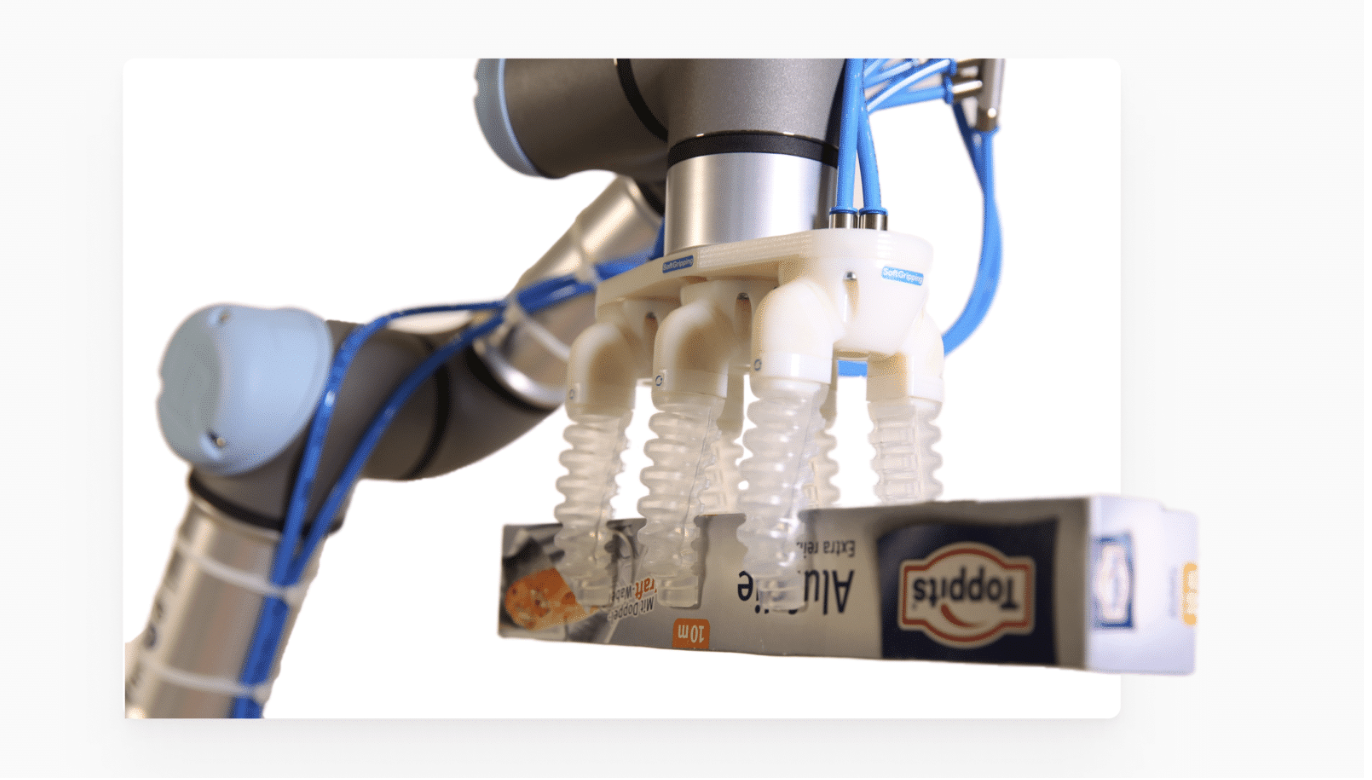
With teach-in, the operator guides the robot arm by hand through the desired movement. The cobot then repeats it independently. Graphical interfaces and no-code systems also handle programming, so conventional robot programming is not required. To perform a real task, a cobot also needs a suitable end effector, such as a gripper, a screwdriving tool or a camera.
A cobot handles payloads of 3 to 25 kg and operates at up to 1 m/s, but does not require a safety fence. An industrial robot is faster, more precise and more powerful, but costs more to set up as a cell. The following table compares the typical values for both types. It shows that the decision is less about good or bad. The application is what matters.
| Criterion | Cobot | Conventional industrial robot |
|---|---|---|
| Payload | 3 to 25 kg | 5 to over 1,000 kg |
| Reach | 500 to 1,300 mm | 500 to over 3,500 mm |
| Speed | up to approx. 1 m/s in collaborative operation | up to 4 m/s and more |
| Repeatability | 0.01 to 0.05 mm | up to 0.02 mm |
| Safety | no safety fence, force limiting | safety fence or scanner required |
| Programming | teach-in, graphical, no-code | specialist personnel, robot programming |
| Floor space | minimal, no fence | large, including safety zone |
| Entry-level costs | approx. 20,000 to 60,000 euros | heavily project-dependent, often higher |
The cobot wins where space is limited, changeovers are frequent and direct collaboration is required. Industrial robots win for high cycle speeds, heavy payloads and maximum precision. For a more detailed cost analysis, see the guide to cobot prices on the market.
The technical specification ISO/TS 15066 defines four methods by which a robot can work safely with people. It supplements the basic standards ISO 10218-1 and ISO 10218-2 for industrial robots. The article on the EU Machinery Regulation for robot cells explains the additional obligations that apply from January 20, 2027. The specification also defines specific limits for force, pressure and speed. Each application uses one or more of these four methods.
Depending on the task, a cobot implements one of these four types of collaboration:
Despite its collaborative design, a risk assessment of the overall system remains mandatory. A cobot with a sharp-edged tool or a heavy workpiece may require a protective area. The standard always assesses the application, not just the arm.
A cobot offers three advantages: low space requirements, rapid reprogramming and entry-level costs from around 20,000 euros. However, it also has three limitations: speed, payload and ultra-high precision. This candid assessment of both sides determines whether a cobot suits the process.
In day-to-day operation, a cobot has three main strengths. It does not need a safety fence, so it fits into confined spaces where a conventional cell would not. Cobots can be adapted to new tasks using teach-in in hours rather than days. This makes them attractive for high-mix, low-volume production with many variants and small batch sizes. They also reduce physical strain by taking over monotonous or ergonomically unfavorable tasks.
The limitations are equally clear. The deliberately restricted speed increases cycle times, so high-throughput processes are better served by conventional robots. A cobot's payload remains limited, and heavy components are too much for the collaborative arm. And although repeatability of 0.01 to 0.05 mm is sufficient for most tasks, some precision applications require more. If there is enough space for an enclosed cell and no collaboration is required, there is little reason to choose the more expensive cobot.
Cobots primarily take over repetitive, physically strenuous or monotonous tasks. This follows the principle of the four Ds: dull, dirty, dangerous and delicate. The most common applications range from palletizing to machine tending and span many industries.
Cobots are typically used in the following processes:
This makes cobots particularly suitable for small and medium-sized businesses. They automate individual workstations instead of converting an entire line.
A cobot usually costs between 20,000 and 60,000 euros to purchase. The robot arm accounts for only around 30 to 50% of the total cost. The remainder goes toward the controller, end effector, integration, safety assessment and training. Anyone who calculates only the price of the arm underestimates the total investment (total cost of ownership).
Payback occurs once the savings in labor and process costs exceed the investment. The calculation depends on three factors: the shift model (automation pays off faster in two- or three-shift operation), the production volume and the previous labor costs of the task. In many cases, payback takes between one and three years, but this depends heavily on the project.
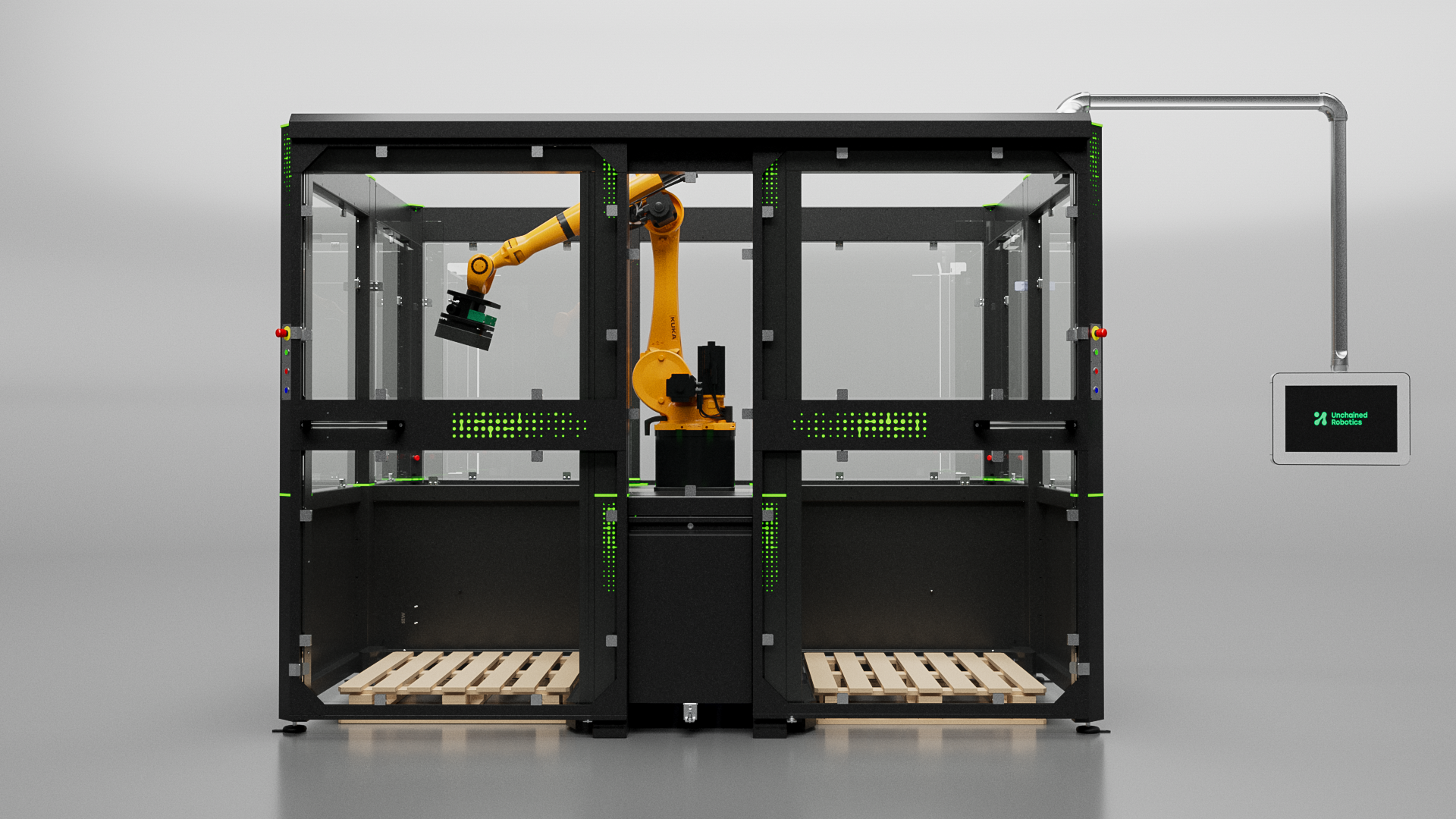
A cobot can also be rented instead of purchased. Rental models lower the barrier to entry and shift the investment into operating costs. See renting robots instead of buying them. As a turnkey alternative, the MalocherBot automation cell from Unchained Robotics combines the arm, gripper, controller and integration in one package. Prices start at 120,000 euros, with installment payments starting at 2,100 euros per month. A breakdown of the total costs is provided in the guide to the cost of a turnkey robot solution.
Four key criteria matter when choosing a cobot: payload, reach, repeatability and a suitable end effector. If you are not setting up the cell yourself, the article How to find the right system integrator explains the criteria for choosing a partner. These four factors determine whether the robot can physically handle the task. Only then come software, interfaces and price.
Assess a cobot using these selection criteria:
On the Unchained Robotics marketplace, you can compare cobots from various manufacturers with listed prices and data sheets. If you are specifically looking for collaborative arms, you will find them in the cobots category. Choosing the end effector is just as important as choosing the arm because it performs the actual process.
Nearly all major robot manufacturers now offer cobots. Leading the way is Universal Robots as the market pioneer, followed by KUKA, Fanuc, Doosan Robotics and Techman Robot. The global cobot market exceeded one billion US dollars in 2023 and is growing at around 11.9% per year. This explains the wide range of models available.
These manufacturers' models cover different payload classes and areas of focus:
| Manufacturer | Country of origin | Typical payload | Known for |
|---|---|---|---|
| Universal Robots | Denmark | 3 to 30 kg | large accessory ecosystem, market pioneer |
| KUKA | Germany | 3 to 14 kg | LBR-iiwa series with torque sensors |
| Fanuc | Japan | 4 to 50 kg | high payloads in the cobot segment |
| Doosan Robotics | South Korea | 5 to 25 kg | broad range of reaches and payloads |
| Techman Robot | Taiwan | 4 to 14 kg | integrated machine vision |
The market ranges from lightweight, sensitive models to models with a payload of 50 kg. Which manufacturer is right depends on the process, the available accessories and the software. Instead of committing to one brand, compare models across manufacturers by payload, reach and price.
The difference lies in the safety concept. A cobot uses sensors to monitor its forces and stops on contact, so it can work directly alongside people without a safety fence. An industrial robot is faster, stronger and more precise, but must be safeguarded by a fence or scanner. The cobot is slower and carries less, but saves space and safeguarding equipment.
A cobot usually costs between 20,000 and 60,000 euros to purchase. The robot arm alone accounts for only about 30 to 50% of the total cost. The controller, end effector, integration, safety assessment and training come on top. You should therefore consider the total cost of ownership for the overall investment, not just the list price of the arm.
Cobots take over repetitive and strenuous tasks such as palletizing, machine tending, pick and place, bin picking, screwdriving, assembly, welding, gluing, dispensing and quality inspection. They are particularly suitable for processes with frequent product changeovers and limited space and are used in manufacturing, logistics, electronics and skilled trades.
Collaboration is safe provided the application has been assessed in accordance with ISO/TS 15066. Torque sensors detect collisions and stop the arm. Collaborative speed stays limited to about 1 meter per second, and force and pressure remain below biomechanical limits. However, a cobot with a sharp tool or a heavy workpiece may still require a protective area.
A cobot generally does not require conventional programming skills. It learns movements through teach-in, with the operator guiding the arm by hand. It can be set up using graphical no-code interfaces. This allows employees without specialist robotics knowledge to set up simple processes and adapt the cobot to new tasks when needed.
Most cobots have a payload of 3 to 25 kg and a reach of 500 to 1,300 mm. Some models handle up to 50 kg. It is important to remember that the weight of the end effector counts toward the payload. A cobot with a 10 kg payload and a 2 kg gripper actually moves only 8 kg of workpiece weight.
The cobot was invented in 1996 by researchers J. Edward Colgate and Michael Peshkin at Northwestern University in the USA. The first cobots had no drive of their own and were used to safely guide loads moved by people. This original concept of safe human-robot collaboration led to the generation of cobots used today.